
Fiddlehead decides to live
Fiddlehead's new EP is out this Friday, and here are some words about it.

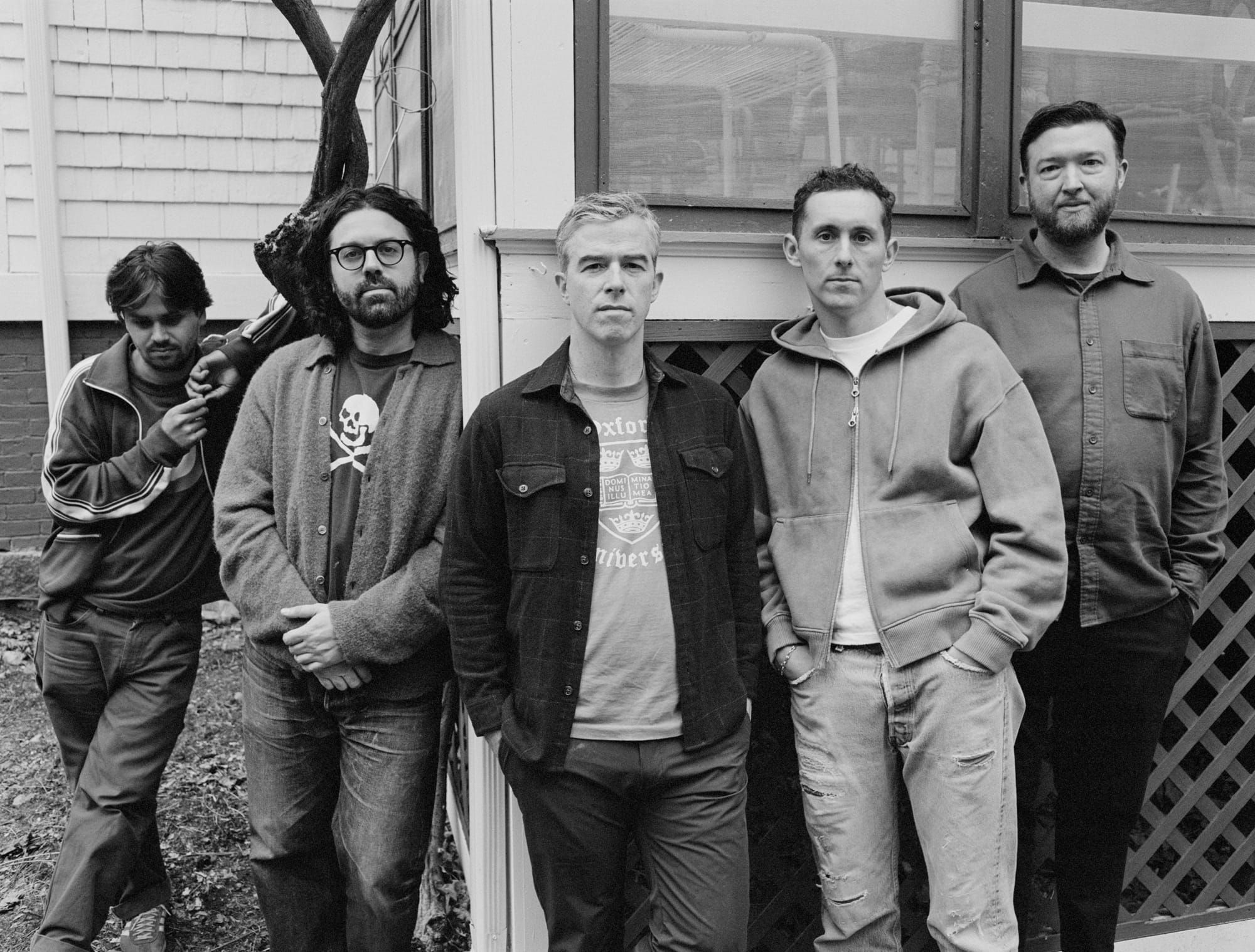
I teased this in my last update but here's something totally different from your standard Former Clarity fare. Occasionally, I get asked to write press bios for bands when they have a new record coming out. It's something I'm rather picky about; I'll only say yes if I'm already a fan or, if the band is new-to-me, I really like the record. When I was asked to write one for a new Fiddlehead EP, I said yes before listening to it. I'd previously written the bio for their second album Between the Richness, interviewed Pat Flynn for this very publication when Death Is Nothing To Us came out, and I committed before I even pressed play. I'm nothing if not impulsive.
For those of you not in the "biz," here's what you need to know: Press bios are usually short. 800 words is usually what I'm asked to deliver, give or take. They are exercised in distillation and concision, taking an album's entire story and creating a succinct narrative for people to use as a jumping off point for future press coverage. Generally, I'll interview one member, sometimes two, and that's more than enough material for such an assignment. For Fiddlehead's three-song Baby I'll Change EP, I was asked to speak to Flynn and guitarists Alex Henery and Alex Dow. That felt like overkill, but what's the harm, really.
When I wrapped those interviews it was clear that there was a bigger story here, and it was one deserving to live beyond press materials. It was agreed upon by the label and myself to pitch it around as a feature story and the bio would take a backseat. I disclosed that fact in each pitch but, what I heard more often than not in the pitching process, was "It sounds cool, but we don't have the budget for freelance pieces right now" or, worse, "We're not interested in music stories right now." Hell yeah, sick.
My groveling complete, I finally put together a bio that's nearly 2,000 words long and the fine folks at Run For Cover decided that's what the story is and thus it shall be. Because I'm proud of it, I decided to run it here, just as it is if you're receiving it in a press packet, because I really do believe in it. I think these songs are great, and it's a story that, if you're a fan of the band, I think you should read.
Baby I'll Change is out this Friday, wherever music can be heard.
Fiddlehead were never supposed to last this long. But if we focus on everything Fiddlehead were never supposed to do, we’d spend time talking about all the things they have done: three powerful albums, two EPs, global tours, mainstay status at hardcore festivals. “We’ve gone into every record with the idea that it might be the last thing we ever do,” says vocalist Pat Flynn. “That was true even of the first EP: ‘This is probably the last thing—probably the only thing.’ Everything’s been treated that way because of the nature of our lives and our relationship with making music and creating art; it’s not career-driven. We don’t care if people like it; we care if we’re satisfied.”
That satisfaction is what’s kept Flynn on the edge of ending Fiddlehead after every major milestone. The band is special, their music industry accomplishments are secondary to the personal fulfillment the members share, and after the release of their third album, Death Is Nothing To Us, Flynn was concerned that making another album just because it’s what they should do might spoil the energy of this thing he holds so dear. Death Is Nothing To Us closed a narrative triad of albums that began with grieving the death of his father and concluded with settling into his role as a father of two. “I wouldn’t say I’ve figured it all out, but I have a much better grasp on it all than I did prior to writing each of those records,” says Flynn. “I felt like this band has done such wonders for my life in a mental health way that I felt totally satisfied. The concept of writing more after the third LP was like, ‘What are we fucking doing here?’”
Tragically, Flynn soon found that answer. The week of Thanksgiving 2024, Flynn dropped his wife and kids at the airport for a cruise with her family, while he stayed home to work. Later that day, he received the call that his mother died. “It was the only time in my life where if I wanted to see my children on a dime, I couldn’t. They were in the middle of the fucking ocean, or somewhere in the Caribbean sea. I felt completely isolated,” says Flynn. Two days later, a knock at his door revealed guitarist Alex Henery and bassist Nick Hinsch, who flew in from California and Texas to surprise their grieving friend.
“That was a really powerful moment, them showing up just to support Pat,” says guitarist Alex Dow. Though they convened as friends, music started to share the space with them, too. “We went to Pat’s house just to support him in a dark time and then we ended up writing music,” says Henery. “It came out of a really good place, of us just wanting to write music together in that moment, and that freed us up to experiment.” Reflecting on it now, Flynn cuts to the core of what has kept Fiddlehead alive all these years: “I don’t think you get better friends than this.”
With new songs unexpectedly forming, and a drive to deepen the scope of Fiddlehead’s musical landscape, Dow received a fortuitous message from producer Alex Farrar (Wednesday, Archers of Loaf, M.J. Lenderman) offering to record new Fiddlehead material. “He wasn’t selling himself, but my gut was telling me that going to Asheville, [North Carolina] to record some songs would be really good to get us out of our comfort zone and get us away from our realities,” says Dow. “Plus, he was clearly passionate about the project. I definitely think he understood the band on a deeper level.” Farrar’s message aligned with Fiddlehead wanting to shake off the pressure of writing a fourth album. They weren’t looking to reinvent what they do, but perhaps find new means of expressing themselves. “Finishing the three LPs, it just felt like maybe it was time to try something different and see what’s possible,” says Henery. With three songs nearing completion, the band took a trip to Farrar’s Drop of Sun studios to see what would come from a three-day recording session.
“The Dogs” came first. With the music originally worked out during Henery and Hinsch’s impromptu visit to Flynn, the song feels like a thrilling progression of the classic Fiddlehead sound. You can close your eyes and instantly picture a crowd bouncing along to Henery and Dow’s riffs, driven forward by drummer Shawn Costa’s thunderous backbeat. It’s the sound of a band reaffirming their commitments to one another, and sharing that joy as one cohesive unit. “It is a love letter to, not just us, but this thing we’ve all built together,” says Dow. Flynn's lyrics reflect on that bond as he sings about each bandmate with genuine love and appreciation. “This is a gift of life to have four guys who I have no dysfunction with,” he says. “Those guys are my brothers and I wanted to stop playing with them? Now I want to keep this thing going until the wheels fall off.”
Next comes “Porchlight,” an exhilarating cut of alternate tuning riffs and stirring vocal melodies. “The thing that we’re always chasing is that unified excitement about a song,” says Henery, describing how Fiddlehead never sees an idea through unless there’s full belief from every member. “We’re just looking for that feeling of getting goosebumps,” says Dow. Little did they know what would come next.
On the final day of recording, the band hit an impasse. The third song they earmarked for this session wasn’t coming together. Henery and Hinsch began to improvise something new but Flynn felt it was taking too long to cohere as the studio time slipped away. “Nick and I were trying to do something and Pat didn’t see it, so it made things awkward for a bit,” says Henery. “We all took a step outside and when Pat came back he apologized and was like, ‘Let’s try your idea again,’ and I was like, ‘That wasn’t going anywhere. You showed me something yesterday, so let me see that again.’”
“I had very sheepishly presented this riff that I’d been working on at my house with my little shitty acoustic guitar.” says Flynn. As Dow and Farrar talked in the control room, he looked up to see his bandmates, who had been quarreling just 15 minutes earlier, becoming intensely focused, so he asked Farrar to unmute the live room. “I thought they were having a conversation, but they were actually playing music. I heard what they were doing and I just remember feeling so victorious. To hear what they were already building, it was an incredibly gratifying moment,” says Dow. That song became “Baby I’ll Change,” the title track and stunning standout of the new EP.
“We were all really excited and it was just so quick; we were all really in the moment,” says Henery. “This song was coming together and it was clearly something we had never done before.” As the band worked out the finer details of the song, Flynn ran back to their Airbnb to write lyrics, a normally laborious process for him. The song’s title, which serves as its refrain, was cribbed from the late Boston hardcore legend Jimmy Flynn, who, at parties, would offer up a drunken, revelrous “baby, I’ll change” to the universe; half a joke, half a wish. “He was the guy who made the Boston scene happen, and everyone you talked to just loved the guy, but we all basically watched him drink himself to death over the last 10 years of his life,” says Flynn. With that as a jumping off point, Flynn quickly tapped into something deeper. “In my life, I’ve been surrounded by addiction, and a lot of hopeful people making big promises and seeing other versions of themselves. That, to me, is the greatest heartache of my life. It’s not seeing people fail, it’s seeing people desperately try to not fail.”
Returning to the studio with the most lyrics he’d ever written for a Fiddlehead song, Flynn found his bandmates now had a fully rendered arrangement. His simple acoustic guitar line had evolved into a sprawlingly dynamic composition, with triumphant reverb-drenched leads, a charging rhythm section, and perhaps the most cathartic finale that Fiddlehead have penned to date. Flynn jumped in the booth to start recording vocals, with no one in the band knowing what to expect. “The emotion was right there in his voice,” says Henery. “It was so fragile but it was so compelling. We were totally silent while he was tracking and he’d occasionally look back and we’d just be like, ‘Keep going. You’re on the right path.’” It was unlike any other Fiddlehead recording, and it opened a creative door that the members all hoped they’d one day walk through.
In the song’s final seconds, a voicemail that Jimmy Flynn left Dow plays. “I used to get these calls from Jimmy when I was living in Los Angeles. At the time, I would roll my eyes and go, ‘Oh boy, this is going to be 30 minutes of rambling.’ He was really on the decline,” says Dow. “Then, right around when Death Is Nothing To Us came out, I started answering every call because I could just tell that I didn’t know how much longer I’d be getting them. Now, I have so many voicemails like the one at the end of the song, and they are pretty brilliant. It’s him talking about things that are just not true, but I can dream with him, and they’re inspiring in a way.”
As Fiddlehead left the studio, they were buzzing at what they just created. Flynn says he was so charged up by what just occurred that he couldn’t sleep that night. “It felt like a new band in a very organic way,” says Flynn, quick to note that Fiddlehead didn’t go into the studio with some self-inflated idea of reinventing the band. They just did what they always have: listen to what’s inside of them and find an honest way of expressing it. “There’s a lot of times in the band group chat where we’re like, ‘What if we did a song like this?,’” says Henery. “And that’s the thing—what if?”